Termites in the Tempe desert
The termites that damage Tempe homes are subterranean termites. They live in the soil and travel into a house through mud tubes the width of a pencil, looking for wood and moisture.
In the Valley, desert subterranean termites are the most common. They can get through cracks in a slab, expansion joints, plumbing penetrations and the bottom of stucco walls.
Many Tempe homes are slab-on-grade ranch houses from the 1950s through the 1980s, and decades of settling leave plenty of cracks.
Flood-irrigated lawns in some older neighborhoods, drip lines against the foundation and leaky hose bibs keep the soil next to the house damp, which termites need.
Termites signs in Tempe
- Mud tubes climbing the stucco, the garage stem wall or the inside of a door frame
- Tubes hanging from a garage ceiling or coming out of a slab crack
- Swarms of small winged insects after a summer monsoon storm, often inside near a window
- Piles of discarded wings on window sills
- Baseboards, door trim or cabinet bases that sound hollow or crumble
- Bubbling or rippled drywall and paint near the floor
Desert termites on the landscape
Some desert termites build thin mud sheets over dead grass, mulch, wood fences and landscape timbers without ever entering the house.
They are a warning sign that termites are active in the yard. The technician checks whether tubes are on the landscape only or reach the structure, because that changes what needs treating.
Where termites show up near South Tempe
The technician checks the full exterior of the foundation and stucco, the garage, expansion joints, plumbing and bath traps, door frames, baseboards, cabinets, the attic where accessible, and any wood touching the soil, such as fences, planters and patio posts.
Areas where water collects near the house are noted, because they draw termites to the slab.
Treatment options
Termites near The Lakes
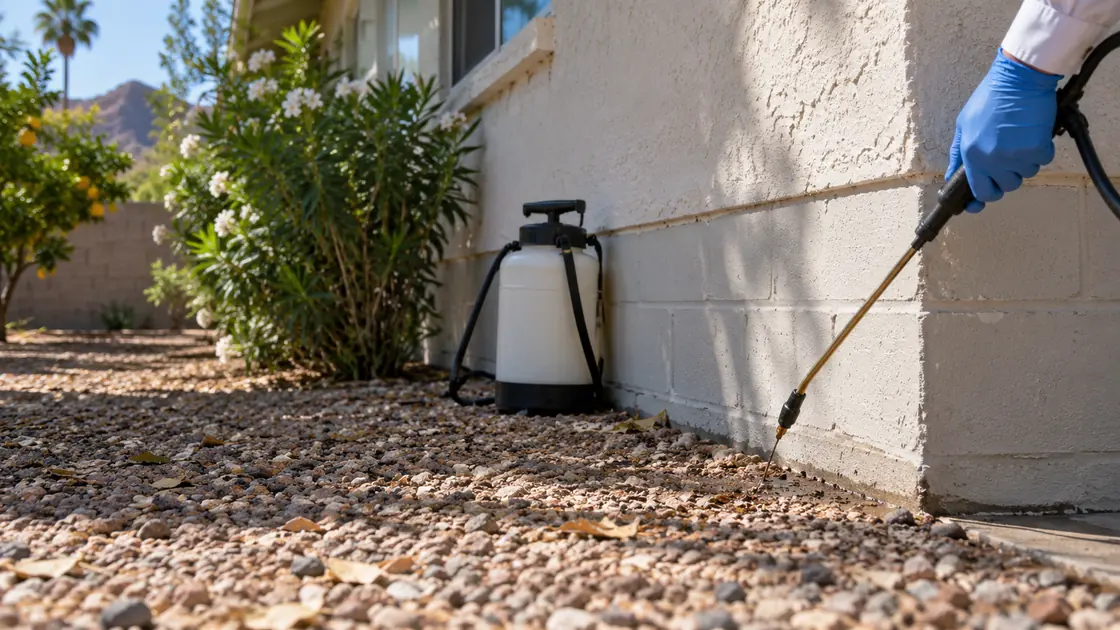
A liquid termiticide is applied in the soil along the foundation and through drilled holes in slab areas where termites are entering.
Termites that move through the treated soil are killed or carry the product back to the colony. It suits active infestations and homes that need protection quickly.
Bait stations
In Tempe, termites near The Lakes are traced from the ridge vent, not from a product chosen before anyone looks.
Baits involve less drilling and suit homes where drilling the slab is difficult, but they take longer to work and need regular monitoring.
Spot work
Mud tubes are knocked down so new activity shows, and damaged trim is noted for repair. Termite treatment is about the colony in the soil, not only the wood you can see.
Reducing the risk
- Keep soil and mulch a few inches below the top of the slab and the bottom of the stucco
- Move drip emitters and sprinklers so they do not soak the foundation
- Fix leaking hose bibs, evaporative cooler drains and AC condensate lines
- Keep firewood, lumber and cardboard off the ground and away from the house
- Replace wood that touches the soil, like fence posts against the wall
Rentals and student housing
Tempe has a lot of rental homes and small apartment buildings around ASU and the older central neighborhoods.
Termite damage in a rental often goes unnoticed because tenants do not know what mud tubes look like, and the first sign is a door frame that crumbles.
Owners can ask for a yearly exterior check of the slab, garage and stucco line, which catches new activity before it reaches the trim.
Termite reports for home sales
Buying or selling a home in Arizona usually includes a wood-destroying insect inspection. If a report notes termite activity or past treatment, ask what was seen, where, and what treatment is recommended.
Termites near The Lakes
Call as soon as you find mud tubes or a swarm. Termite damage builds slowly, and early treatment means less repair. Call now and tell us where you found the tubes or swarmers.
Termite quick facts for Tempe
- Desert subterranean termite (*Heterotermes aureus*): the main termite in Tempe homes. It lives in the soil and builds thin mud tubes on slabs, stucco and drywall.
- Desert termite (*Gnathamitermes perplexus*): builds mud sheets on desert plants, fences and dead wood, and rarely attacks homes.
- Swarm season: mostly during the monsoon, after the first summer storms, often in the evening.
- Treatment types: a liquid soil termiticide applied as a barrier, or bait stations placed around the home.
- Regulator: pest control in Arizona is licensed by the Arizona Department of Agriculture, Pest Management Division.