Where Tempe's scorpions live
Tempe is mostly built out, so people are sometimes surprised to find scorpions in a 1960s neighborhood miles from open desert.
Bark scorpions do not need open desert. They need cracks to hide in, insects to eat and a little moisture, and Tempe yards supply all three.
- Block walls. The long block walls between Tempe yards are full of gaps, hollow cores and loose caps. They are the single most common scorpion hiding place in town.
- The buttes and Papago Park. Homes near Hayden Butte, the Tempe Buttes and Papago Park border rocky desert habitat and see more scorpions year-round.
- Palm trees. The dead fronds, or skirts, on unpruned palms hide scorpions and roof rats alike.
- Rock and gravel landscaping. Decorative rock, boulders and edging give scorpions shelter right next to the foundation.
- Irrigated yards. Drip lines and lawns attract the crickets and roaches scorpions eat.
How they get inside
Bark scorpions climb, so they come in high and low.
The usual entry points are gaps under exterior doors and garage doors, the weep screed at the bottom of stucco walls, gaps around pipes under sinks and behind washers, utility penetrations, attic vents and gaps around windows and evaporative cooler or AC ducts.
Once inside, they look for cool, damp, dark spots: bathrooms, under sinks, closets, laundry rooms and garages.
Signs of a scorpion problem
- Scorpions found indoors, especially in bathrooms, tubs, closets and garages
- Scorpions on walls or ceilings at night
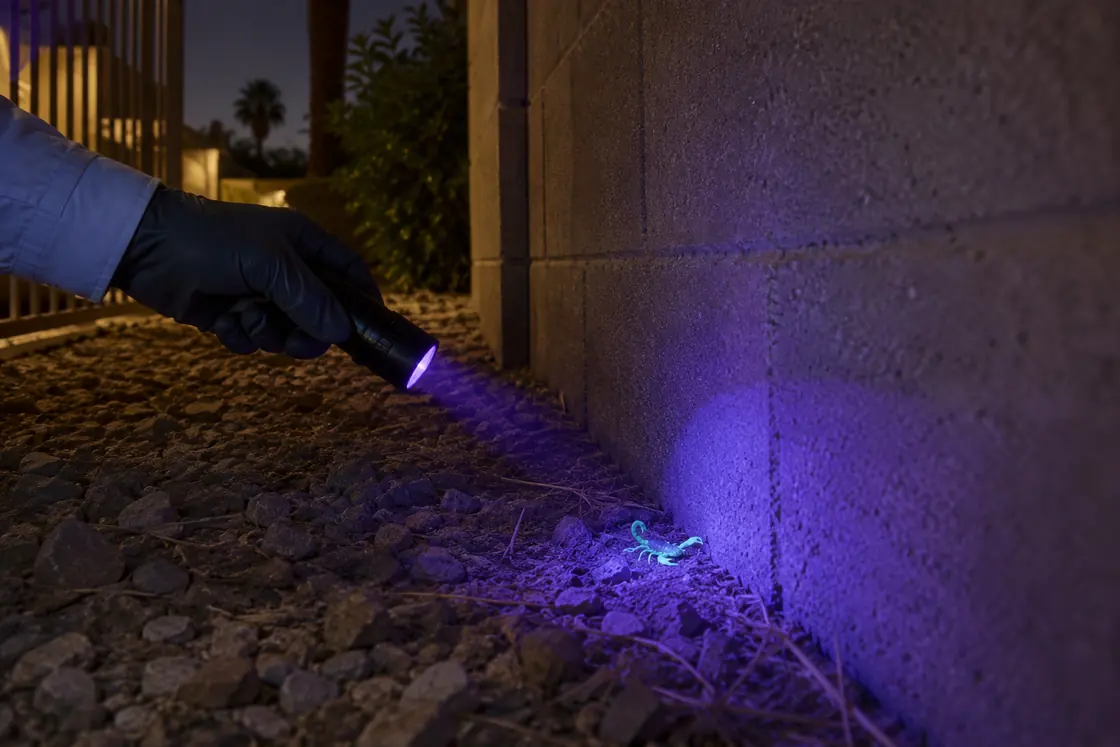
- Many scorpions glowing on block walls under a UV flashlight
- Lots of crickets and roaches around the house
Do not close up the expansion joint before the inspection for scorpions in Tempe, or the useful evidence is gone.
Night inspection
Scorpions glow under ultraviolet light.
An evening walk of the yard with a UV flashlight shows where they are and roughly how many: along the block walls, around the foundation, in rock beds, on palm trunks and near doors.
Treating harborage
Treatment goes where scorpions shelter and travel: block wall gaps and caps, the foundation and weep screed, door frames, garage edges, rock beds, palm skirts and stacked materials.
Inside, the focus is on wall voids, behind baseboards, plumbing penetrations, the garage and attic access points.
Cutting their food supply
Treating crickets, roaches and other insects makes the yard less appealing. Yellow or LED porch lights draw fewer insects than white bulbs.
Sealing
This is the part that makes the biggest difference.
Door sweeps and weather stripping, sealing the gap at the weep screed, caulking around pipes and wires, and garage door bottom seals keep more scorpions outside, where the treatment is.
Follow-up
In the desert, scorpion control is ongoing. Regular visits from spring through fall re-treat harborage areas and check for new activity.
Kids, pets and stings
Bark scorpion stings cause intense pain, numbness and tingling. Young children, older adults and people with health conditions can have severe reactions.
If someone is stung, call the Arizona Poison and Drug Information Center or your doctor, and seek emergency care for severe symptoms. Pets are stung too; call your vet if a pet is stung.
To lower the risk at home: - Move beds and cribs a few inches from walls and keep bedding off the floor - Shake out shoes, clothes and towels before using them - Use a blacklight to check rooms at night if you are seeing scorpions - Store garage items in sealed plastic bins rather than cardboard
What you can do in the yard
- Prune palm skirts and trim shrubs away from the house
- Pull rock and debris back from the foundation
- Keep firewood and lumber off the ground and away from the walls
- Fix leaking irrigation and drip lines near the house
Near Maple-Ash, scorpions turn up at the attic hatch before they turn up in the main rooms.
We do not promise zero scorpions. We do not spray broadly through living spaces. And we do not skip the sealing, because treatment alone has limited effect on scorpions.
Rentals and HOAs
In townhome and condo communities, scorpions travel along shared walls and common landscaping.
HOA-wide treatment of perimeter walls and common areas, combined with individual home treatments, gives better results than treating one unit at a time. Managers can call to discuss community service.
Scorpions near Maple-Ash
Call when you find scorpions indoors, especially with small children at home, or before the warm months. Call now.
Scorpion quick facts for Tempe
- Species: the Arizona bark scorpion, *Centruroides sculpturatus*, the most venomous scorpion in North America and the one found in most Tempe homes.
- Size and look: about 2 to 3 inches long, light tan, with slender pincers and a thin tail.
- Habits: active at night, climbs walls, ceilings and trees, and hides in block walls, palms, woodpiles and attics.
- Sting: severe pain, numbness and tingling. Young children and older adults can have serious reactions and should be seen by a doctor.
- Blacklight: bark scorpions glow under ultraviolet light, which makes a night inspection of walls and yards effective.