How roof rats came to Tempe
Roof rats were first confirmed in the Phoenix area in the early 2000s and have spread through many older Valley neighborhoods since then.
Tempe's established neighborhoods, with mature citrus, palms, oleander hedges, block walls and alleys, are close to ideal habitat.
They are agile climbers, slim and dark with a tail longer than their body, and they prefer to live up high.
Where rodents show up near Mill Avenue
- Scratching or running sounds in the attic or ceiling after dark
- Hollowed-out citrus still hanging on the tree, with just the rind left
- The rodents check in Tempe covers the dishwasher line and the expansion joint on the same walk-through.
- Gnaw marks on wiring, irrigation lines, fruit, pet food bags or attic insulation
- Rats seen running along block walls, fences or power lines at dusk
- Grease marks where they squeeze through gaps
Where they get into Tempe homes
- For rodents in Tempe, the visit starts at the weep holes and then follows whatever that shows.
- Unscreened or damaged gable and roof vents
- Gaps around the AC line set, evaporative cooler ducts and plumbing vents
- Openings under roof tiles at the eaves, called bird stops, when they are missing
- Garage door gaps and pipe penetrations at ground level
- Tree branches and palm fronds touching the roof
What decides the rodents plan in Tempe is the building near Chandler, and the meter box is on that list.
Inspection
The technician checks the roofline, attic, garage, yard, trees and fence lines. They look for droppings, gnaw marks, runways and nests, and note every gap rats can use.
Sealing
Gaps are closed with materials rats cannot chew: hardware cloth on vents, metal flashing at roof-to-wall gaps, steel mesh and sealant around lines and pipes, and bird stops under tile eaves. Foam alone is not used.
Trapping
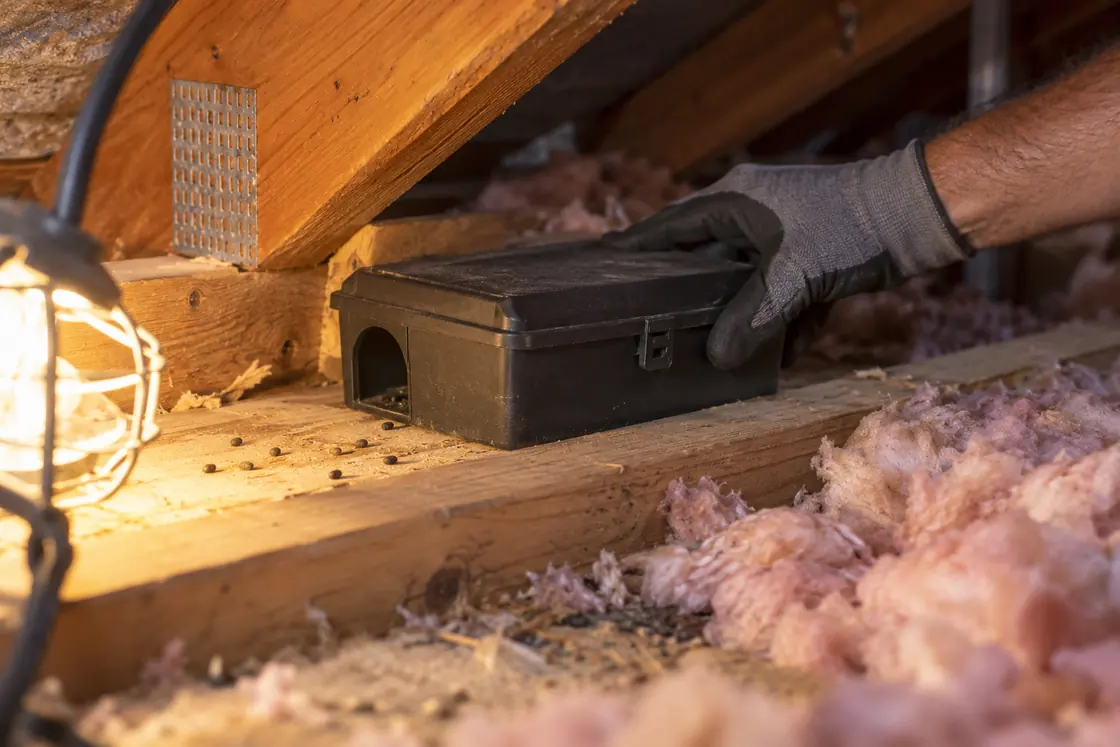
Traps go in the attic, garage and along runways. Roof rats are cautious around new objects, so traps may be placed unset for a few days so the rats get used to them.
Trapping lets rats be removed instead of dying in walls.
Timing the sealing
If rats are inside the attic, sealing every gap at once can trap them in the house. The technician sequences sealing and trapping so the rats inside are dealt with.
Follow-up
Near Guadalupe, rodents turn up at the dryer vent before they turn up in the main rooms.
If you have seen rodents near Mesa, leave the soffit gap as you found it and photograph it.
- Pick ripe citrus promptly and pick up fallen fruit
- A Tempe home with rodents at the utility chase needs that spot named when you call, so the visit starts in the right place.
- Prune dense oleander and palm skirts where rats nest
- Writing down where rodents were seen near Mesa, including the eave gap, makes the Tempe visit shorter and more exact.
- Keep woodpiles and clutter off the ground and away from walls
- Do not leave pet food or water out overnight
Neighborhood rats
Roof rats travel along block walls and alleys from yard to yard. Treating one house helps that house, but if the neighbors' citrus is full of rats, pressure continues.
Talking with neighbors about picking fruit and trimming trees, or coordinating service through an HOA, makes everyone's results better.
Do not close up the expansion joint before the inspection for rodents in Tempe, or the useful evidence is gone.
We do not throw loose poison into your attic. We do not seal rats inside your house. And we do not call the job finished without a follow-up showing the activity has stopped.
Pools, ponds and palm-lined alleys
Many Tempe homes have backyard pools, fountains or ponds, and roof rats need water every day, especially in summer.
Combined with fruit trees and the cover of palms and oleander along alleys, a backyard can supply everything a rat colony needs.
Keeping pool and pond edges clear of dense plants and trimming alley-side vegetation removes some of that cover.
Cleanup and health
Rat droppings and urine can carry disease. Do not sweep or vacuum dry droppings. Wear gloves, spray with disinfectant, let it soak and wipe up.
Heavily soiled attic insulation may need removal, which the technician will explain and quote separately. Check attic wiring for gnaw damage.
Pack rats and mice
Not every rodent in Tempe is a roof rat.
Pack rats near Papago Park and the buttes build stick nests under shrubs and in engine bays, and house mice move into garages in cooler months.
The inspection confirms which you have, because each needs a slightly different plan.
Rodents near Guadalupe
Call when you hear noises overhead, find hollowed fruit or see droppings. Call now.
Roof rat quick facts for Tempe
- Species: the roof rat, *Rattus rattus*, slender and dark with a tail longer than its body. It was first found in the Phoenix area around 2001 and has spread across the Valley.
- Food: citrus fruit, dates, pet food, bird seed and garden vegetables.
- Signs: hollowed-out oranges and grapefruit still hanging on the tree, droppings in the attic or garage, and scratching at night.
- Entry points: roof vents, the gaps where the roof meets the fascia, under tile roofs, AC line chases and gaps around garage doors.
- Pack rats: the white-throated woodrat, *Neotoma albigula*, is a different rodent that builds stick nests and chews car wiring, and is handled differently.